



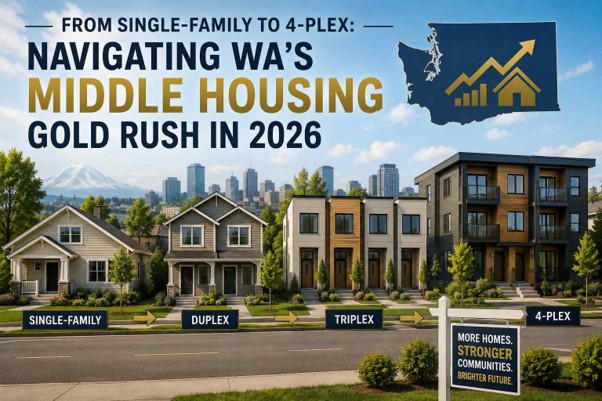
Washington’s housing rules are opening new doors for small-scale real estate development in 2026. A single residential lot may now offer room for a duplex, triplex, or fourplex in places where local rules allow it. For investors, Washington middle housing creates a path to add rental units without jumping straight into a large apartment project. Still, zoning, permits, construction costs, utilities, and financing all need careful review before a deal moves forward.
For investors using private capital, the key is simple: know the property, know the local rules, and build a solid financing plan before spending money on construction.
What Is Middle Housing in Washington?
Middle housing refers to residential buildings with two or more homes. Examples include duplexes, triplexes, fourplexes, townhouses, cottage housing, courtyard apartments, and other small-scale housing forms.
Washington’s middle housing rules grew from legislation such as HB 1110. State guidance says qualifying cities must allow several middle housing types in certain residential areas. The exact number of units depends on the city’s size, location, zoning, and other factors.
The rules do not mean every single-family lot can become a fourplex. Local development standards still matter. Setbacks, lot coverage, stormwater rules, tree requirements, utilities, critical areas, building codes, and other site limits can affect a project.
So, investors need to look past the headline and check the actual property.
Read More :- How Long Do Hard Money Loans Last?
Why Are Investors Looking at 4-Plex Projects?
A fourplex can create four rental units on one parcel. For an investor, this can spread rental income across several units instead of relying on one tenant.
The benefits of middle housing in Washington can also include better use of existing residential land and infrastructure. State Commerce guidance notes that middle housing can add housing supply while fitting the scale of single-family neighborhoods.
For investors, the project may offer several potential advantages:
- Several rental units can create multiple income streams.
- One property can support a small rental portfolio.
- Existing land may gain value through approved redevelopment.
- A fourplex can serve renters who do not need or want a large home.
- Small projects may fit an investor’s strategy better than a large multifamily development.
The numbers still need to work. A strong zoning plan does not fix a weak deal.
How Can Property Owners Determine if Their Lot Qualifies for Redevelopment?
Start with the local planning department and confirm the property’s zoning. Next, review the city’s middle housing code and development standards. Check the parcel size, lot width, setbacks, maximum lot coverage, height limits, parking rules, access, utility service, critical areas, and stormwater needs.
A property near a major transit stop may also have different density and parking rules. State law sets specific requirements for certain cities, including limits on parking requirements for qualifying middle housing projects.
A basic due diligence review should cover:
- Current zoning and allowed housing types.
- Minimum lot size and lot dimensions.
- Water and sewer availability.
- Access for construction and emergency vehicles.
- Setbacks, height, and lot coverage.
- Parking and driveway requirements.
- Critical areas and environmental limits.
- Permit and design review requirements.
Do not assume a parcel qualifies just because a nearby property has several units.
Read More :- Portfolio Loan vs Conventional Mortgage: Which Is Better?
How to Build a Fourplex in Washington
The process starts long before construction. First, confirm zoning and site feasibility. Then create a preliminary design based on local rules. An architect, designer, engineer, or other qualified professional can help test the concept before detailed plans begin.
Next, estimate the full project cost. Include land, design, permits, utility work, demolition, construction, financing, insurance, taxes, contingency funds, and carrying costs.
After the numbers make sense, prepare the permit package and financing structure.
State rules can support middle housing, but local approval still depends on the project’s ability to meet applicable requirements. Washington law also allows objective development standards such as setbacks, lot coverage, stormwater, clearing, and tree retention rules.
In short, the right process is research first, numbers second, design third, and construction last.
Converting a Single-Family Home Into a Fourplex
The existing building may need new entrances, kitchens, bathrooms, electrical systems, plumbing, fire protection, insulation, parking changes, and separate utility arrangements. The local building code may also affect the project in ways zoning alone does not cover.
A property owner should compare two paths:
- Remodel the existing structure into several units.
- Remove the existing structure and build a new fourplex.
The cheaper option is not always the better option. A detailed inspection and construction estimate can help reveal which route offers a stronger return.
Financing Middle Housing Projects
Traditional residential financing may not fit every redevelopment plan. A project involving construction, major renovation, or several rental units can require a different loan structure.
Investors may review single-family rental property loans for properties that fit standard rental lending rules. For a duplex project, duplex investment property loans may also provide a financing route when the property and borrower meet lender requirements.
Four-unit projects can require closer review. Fourplex investment property loans may involve property income, borrower experience, equity, project scope, and the property’s completed value.
Private money can also provide another path for investors who need financing based on the deal rather than a standard bank process.
How Private Money Can Support a Fourplex Deal
Private lenders may offer more flexibility for certain real estate projects. Loan terms can vary based on the property, borrower, exit plan, collateral, project scope, and lender appetite.
A private money loan broker in Washington can connect investors with private lenders and help present the deal in a clear format. For a redevelopment project, useful documents may include the purchase contract, property details, plans, construction budget, timeline, projected value, rent estimates, and exit strategy.
Brazington Mortgage LLC specializes in private money loans and connects real estate investors with reliable private lenders. The goal is to help investors understand their financing options before they commit capital to a project.
What Are the Benefits of Investing in Middle Housing Developments?
The answer depends on the property and the numbers, but the model can offer a useful mix of rental income, land use, and small-scale development potential.
A fourplex also gives an investor several units under one roof. If one unit becomes vacant, the property may still generate income from the others. Still, investors should account for repairs, vacancies, taxes, insurance, management, maintenance, and financing costs.
The best deal is not simply the project with the most units. It is the project where the land, construction plan, financing, and expected income work together.
A New Opportunity With Real Due Diligence
Washington’s middle housing rules create fresh opportunities for investors, but the word “opportunity” should not replace proper research. State requirements differ by jurisdiction, and local rules can affect what a property can support.
For rural areas, 2026 legislation also changed rules for certain limited areas of more intensive rural development. HB 2269 allows qualifying middle housing in certain rural settings under specific conditions, including rules tied to sewer or large on-site sewage systems.
So, before buying a property for redevelopment, verify the local code, confirm site capacity, build a realistic budget, and secure a financing plan.
Build the Deal Before You Build the Units
Washington’s middle housing rules give investors new ways to think about residential property. Still, a good project starts with solid due diligence and a clear financing plan.
If you are evaluating a duplex, triplex, fourplex, conversion, or small multifamily redevelopment, Brazington Mortgage LLC can help you explore private money financing options and connect your project with private lenders. Contact Brazington Mortgage LLC to discuss your property, funding needs, and next steps before you put the hammer to work.
Frequently Asked Questions
Q1: What is middle housing in Washington State?
Middle housing includes residential types such as duplexes, triplexes, fourplexes, townhouses, cottage housing, and courtyard apartments. Washington uses these housing forms to add more homes while keeping development at a smaller neighborhood scale.
Q2: What is House Bill 1110, and how does it affect homeowners?
House Bill 1110 created state requirements for certain cities to allow middle housing in areas zoned mainly for residential use. Depending on the city and location, rules may allow two, four, or six units per lot.
Q3: Can I convert my single-family home into a fourplex in Washington?
Possibly, but approval depends on local zoning, the property’s location, lot conditions, building codes, utilities, and development standards. A homeowner should confirm the property’s eligibility with the local planning department before starting a conversion project.
Q4: Which cities in Washington must comply with the middle housing law?
The law applies to cities planning under Washington’s Growth Management Act and sets different requirements based on population and location. Cities with 75,000 or more residents generally face four-unit minimums, while qualifying smaller cities have lower minimums.
Q5: What permits are required to build a fourplex in Washington?
Permit needs depend on the city and project. A fourplex may require building, electrical, plumbing, mechanical, site development, and other approvals. Local rules may also cover stormwater, parking, setbacks, trees, and environmental review.
Q6: How does middle housing impact property values?
Middle housing may affect a property’s value by creating additional development potential. However, value depends on zoning, lot size, location, construction costs, rental demand, and project feasibility. Investors should get a proper property and financial review before relying on added density.