


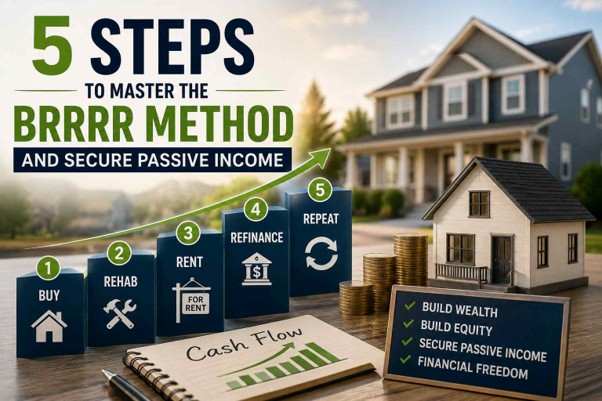
Building rental income takes more than finding a property and putting a tenant in it. Investors need a clear plan for buying, fixing, renting, refinancing, and repeating the process. What is the BRRRR method? It is a real estate strategy built around five actions: Buy, Rehab, Rent, Refinance, and Repeat. Used with careful planning, it can help investors recycle capital and grow a rental portfolio.
For investors who want to know how the BRRRR method works, the process starts with finding a property with room for improvement. The goal is to improve the property, raise its value, create rental income, and use refinancing to recover part of the money invested. Good financing plays a key role at each stage.
5 Steps to Master the BRRRR Method for Building Passive Rental Income
1. Buy the Right Investment Property
The first step can shape the whole BRRRR deal. A low purchase price alone does not make a property a good investment. Investors need to study the neighborhood, repair needs, expected rent, future value, taxes, insurance, and other costs before making an offer.
Start with a simple deal analysis. Estimate the purchase cost, rehab budget, loan costs, holding costs, and expected value after repairs. Then compare these figures with expected rental income.
A useful target is a property with a clear value gap. For example, an older home may need a new kitchen, fresh flooring, updated fixtures, or roof work. After the work, the property supports a stronger rental rate and a higher appraised value.
Financing also needs attention at this stage. A Private Money Loan broker can help investors understand private lending options and connect the project with suitable funding sources.
2. Create a Smart Rehab Plan
The rehab stage can make or break the numbers. Investors should focus on repairs that improve safety, function, rental appeal, and property value. A fresh coat of paint helps, but major systems need attention first.
Before work begins, build a written scope of work. List each repair, its estimated cost, and the expected completion time. Keep a reserve for surprise costs since older properties can hide problems behind walls, floors, and ceilings.
Do not spend money on features renters do not value. Instead, focus on durable finishes and useful upgrades. Kitchens, bathrooms, flooring, lighting, doors, and curb appeal can all affect the rental experience.
Investors who need funds for property improvements consider renovation investment property loans as part of their financing plan. The right loan structure can help keep the rehab budget aligned with the project.
3. Rent the Property and Build Cash Flow
Once the rehab is complete, the next goal is to place a qualified tenant in the property. Rental income helps cover loan payments, taxes, insurance, repairs, and other operating costs.
Set rent based on local market data and the property’s condition. A clean, safe, well-maintained home can support a strong rental position. Still, investors should avoid setting rent too high and creating long vacancy periods.
Create a realistic cash flow estimate before the property is rented. Include costs such as:
- Mortgage payments
- Property taxes
- Insurance
- Repairs and maintenance
- Property management
- Vacancy reserves
- Utilities paid by the owner
- Capital expense reserves
This step helps investors understand how to build passive income with rental properties in a practical way. Rental income is not fully passive at the start. Good systems, property management, tenant screening, and regular maintenance can reduce the daily work involved.
4. Refinance After Creating Value
Refinancing is the fourth part of the BRRRR model. Once repairs are complete and the property has established value, investors may seek a new loan based on the updated property value and their financial position.
An appraisal can help establish the property’s current market value. The lender will also review factors such as income, credit, debt, property condition, loan terms, and rental performance.
The goal is to recover part of the capital used in the original purchase and rehab. Recovered funds can then support another investment.
Still, refinancing is not automatic. The new loan must make financial sense after considering interest, closing costs, payment changes, and available equity. Investors should also check if the property can support the new debt through rental income.
Depending on the deal, residential investment property loans can provide a path toward long-term portfolio growth. A financing professional can help investors review the loan structure before they commit.
5. Repeat the Process With Better Systems
The final step is to Repeat. Once one property performs well, investors can use lessons from the first deal to improve the next one.
Keep records of rehab costs, contractor performance, rental income, vacancy, repairs, loan terms, and final property value. These records can help reveal what worked and where money was lost.
As the portfolio grows, investors need a repeatable system for deal analysis, financing, rehab management, tenant placement, and property oversight. Strong systems can support building a rental property portfolio without treating every new property like a brand-new project.
Financing also becomes a key part of the process. Investors are advised to work with an investment property expert to review funding options and determine how each loan fits the next acquisition.
How Private Lending Can Support the BRRRR Strategy
Private Money Lending focuses on loans funded by private lenders rather than traditional bank lending alone.
A Private Money Loan broker like Brazington Mortgage LLC helps connect investors with reliable private lenders based on the needs of a specific project. This includes reviewing the property, loan purpose, requested amount, exit plan, and project timeline.
Investors should still review every loan with care. Look at the full cost, repayment terms, collateral requirements, timeline, and refinance plan. Good financing should support the investment rather than put pressure on its cash flow.
Brazington Mortgage LLC helps investors review funding paths and connect with lending options suited to real estate projects. The focus should always remain on sound numbers, clear terms, and a realistic exit plan.
Read More :- Fix and Flip Loan vs Traditional Mortgage: Key Difference
Common BRRRR Mistakes to Avoid
A strong strategy can fail when the numbers are too optimistic. Watch for these common mistakes:
- Underestimating rehab costs
- Ignoring vacancy and repair reserves
- Assuming the future appraisal value
- Taking on debt the rental cannot support
- Skipping a full property inspection
- Using poor-quality materials to save money
- Failing to plan the refinance before buying
- Buying in an area with weak rental demand
A careful investor runs the numbers before signing the purchase contract. It is better to walk away from a weak deal than force a project to work.
Build Your Next BRRRR Deal With a Clear Plan
The BRRRR strategy can give real estate investors a structured path toward rental income and portfolio growth. Success depends on disciplined deal analysis, controlled rehab costs, strong tenant demand, and financing built around the property’s numbers.
Brazington Mortgage LLC can help investors review funding options and connect with trusted lending solutions for their next investment project. If you are ready to evaluate a BRRRR opportunity, reach out today and start your next deal with a clear financing plan.
Frequently Asked Questions
Q1: What is the BRRRR method in real estate investing?
The BRRRR method stands for Buy, Rehab, Rent, Refinance, and Repeat. Investors purchase a property, improve it, rent it out, refinance based on its value, and use recovered capital for another investment.
Q2: How does the BRRRR strategy generate passive income?
BRRRR can create rental income after a property is repaired and leased. After operating costs and debt payments, positive cash flow remains. Property management can also reduce the owner’s day-to-day workload.
Q3: Is the BRRRR method suitable for beginners?
Beginners can use BRRRR, but they need strong planning and a clear budget. Understanding property values, rehab costs, rental demand, loan terms, and refinance rules is vital before taking on a first project.
Q4: How much money do you need to start the BRRRR method?
There is no single starting amount. Capital needs depend on the property, loan structure, rehab scope, closing costs, reserves, and lender requirements. Investors should prepare enough funds to handle planned work and unexpected expenses.
Q5: What types of properties work best for the BRRRR strategy?
Properties with solid rental demand and clear value-add potential can fit the BRRRR model. Homes needing manageable repairs offer room for value growth, provided the purchase price and projected costs support the deal.
Q6: What are the biggest risks of using the BRRRR method?
Key risks include rehab overruns, low appraisals, weak rental demand, high vacancy, rising borrowing costs, and poor cash flow. A detailed deal analysis and realistic refinance plan can help investors manage these risks.