


Commercial property owners need a clear plan when an existing loan approaches its end date or no longer suits their investment goals. A commercial property refinance replaces an existing property loan with new financing under revised terms. Private money refinancing offers a funding route for eligible property owners who need to review their debt, address a balloon payment, or explore available property equity.
The process starts with reviewing the current loan, checking property value, preparing financial records, and comparing private lending terms. Before moving ahead, borrowers should review interest rates, lender fees, repayment schedules, and the final payment date. A well-planned refinance helps owners judge whether the new loan supports their property and financial goals.
What Is Commercial Property Refinancing?
Understanding Private Money Refinancing
Private money refinancing replaces an existing commercial real estate loan with a new loan funded by private lenders or investors. The lender reviews the property, existing debt, borrower finances, and repayment plan before deciding on approval.
The new loan may have a different interest rate, term, payment schedule, or maturity date. Some arrangements provide funds beyond the amount needed to repay the current mortgage, subject to lender approval and transaction costs.
How Does the Process Work?
Private money commercial real estate refinancing follows a clear process:
- Review the current loan balance, maturity date, and payoff terms.
- Check the property’s market value, condition, and available equity.
- Review rental income, operating costs, and other debts.
- Compare private lending terms, fees, and repayment rules.
- Submit the required documents for lender review.
- Complete underwriting, closing, and repayment of the existing loan.
Which Properties Qualify?
Eligible properties depend on the lender’s rules and the details of each transaction. Examples include:
- Office buildings and retail properties
- Warehouses and industrial buildings
- Mixed-use commercial properties
- Rental properties held for investment
- Eligible multifamily investment properties
- Commercial properties facing an upcoming balloon payment
Read More :- Hard Money vs. DSCR Loans: Which Is Better for Your Washington Rental Strategy?
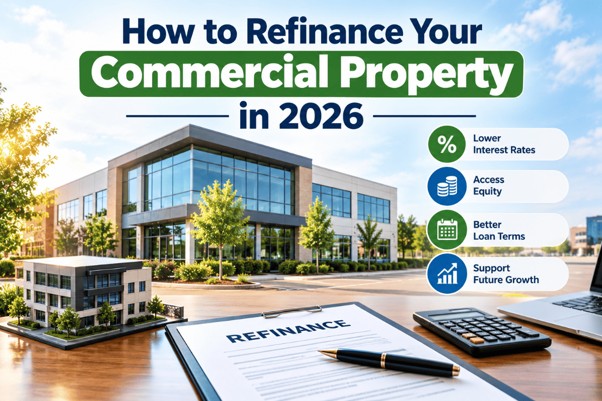
How to Refinance Your Commercial Property in 2026
Private money refinancing starts with a review of the existing mortgage, property value, and loan repayment plan. Follow these steps to prepare a strong application.
Commercial Property Refinancing Planning Timeline
| Step | What Happens |
| 1. Review the loan | Check the balance, interest rate, maturity date, payoff amount, and penalties. |
| 2. Assess finances | Review property income, expenses, existing debts, and repayment capacity. |
| 3. Estimate property value | Assess the building’s market value, condition, and available equity. |
| 4. Prepare documents | Gather tax records, insurance details, loan statements, and lease agreements. |
| 5. Compare private lenders | Review interest rates, fees, repayment terms, and loan maturity dates. |
| 6. Submit the application | Provide the requested property and financial records. |
| 7. Complete underwriting | The lender evaluates the collateral, loan request, and repayment plan. |
| 8. Close the loan | Finalize documents and use the approved funds to repay the existing mortgage. |
Start early, especially if a balloon payment is approaching. Early planning leaves more time to review offers and resolve documentation issues.
What Financial Factors Affect Commercial Refinancing?
Private lenders assess several factors before approving a refinancing request.
- Property value: The accepted market value helps determine the strength of the collateral.
- Loan-to-value ratio: LTV compares the proposed loan amount with the property’s accepted value.
- Rental income: Rent, occupancy, and operating costs help show whether the property supports loan payments.
- Outstanding debt: The current payoff amount determines the funds required to replace the mortgage.
- Available equity: Sufficient equity supports a stronger application, although it does not guarantee approval.
- Loan costs: Interest, lender fees, closing expenses, and prepayment penalties affect the total borrowing cost.
Private money investment property refinance loans offer a route for eligible investors seeking to restructure property debt. However, each lender sets its own requirements. The final terms depend on the property, borrower, loan purpose, and repayment plan.
Benefits and Limitations of Private Money Refinancing
Key Benefits
- Replaces existing financing with terms suited to the property’s investment goals.
- Provides a possible solution for an upcoming balloon payment.
- Offers eligible borrowers access to property equity for approved business purposes.
- Creates financing opportunities for properties that do not fit conventional lending criteria.
- Provides different repayment structures, including selected long-term options.
Important Limitations
- Closing costs and lender fees increase the total cost of refinancing.
- Prepayment penalties on the existing mortgage reduce the financial benefit.
- Private money loans may carry higher rates than conventional financing.
- Balloon payments require a clear repayment or exit plan.
- Borrowers risk losing the property if they fail to meet the loan terms.
Therefore, compare the full cost of the new loan against the benefits. A lower monthly payment alone does not prove the refinance offers better value.
How to Prepare for Refinancing in 2026
Good preparation helps borrowers present a clear financing request. Before applying, complete these tasks:
- Review the current mortgage, payoff amount, maturity date, and prepayment terms.
- Obtain a recent property valuation and estimate available equity.
- Organize tax records, financial statements, insurance documents, and loan statements.
- Prepare rent rolls, lease agreements, occupancy details, and operating expense records.
- Compare proposed loan terms, fees, payment schedules, and balloon obligations.
- Set a realistic repayment strategy before accepting a new loan.
Keep records updated throughout the loan term. Track property income, expenses, occupancy, taxes, and insurance. Start reviewing refinancing options well before the maturity date.
Does Commercial Refinancing Require Substantial Equity?
Equity requirements depend on the lender, property type, existing debt, and proposed loan structure. Private lenders assess collateral value, repayment capacity, and transaction risk. Strong equity supports an application, but approval still depends on the complete loan review.
Private Money Refinancing Options for Investors
Private money financing provides an alternative funding source for eligible business-purpose real estate transactions. A private lender reviews the property’s value, existing mortgage, borrower finances, and proposed use of funds.
| Financing Option | Main Purpose |
| Commercial refinance loans | Replace existing debt under an approved new loan structure. |
| Real estate investor refinance loans | Support eligible investors in restructuring debt secured by investment properties. |
| Small commercial property loans | Address financing needs for qualifying smaller commercial properties. |
These options differ in loan size, fees, maturity dates, and repayment rules. Some private loans use monthly payments followed by a balloon payment. Others offer fully amortizing repayment, subject to lender approval.
Is Your Commercial Property Ready for Refinancing?
Consider exploring private money refinancing if your mortgage approaches maturity, property equity has increased, or existing terms no longer suit your investment plans.
A professional lending review is especially useful if the property has vacancies, variable rental income, or a large balloon payment. It also helps when conventional financing does not fit your circumstances.
Before proceeding, review the loan’s total cost, repayment schedule, and exit strategy. The right structure should support the property’s income and your ability to repay the debt.
Common Commercial Property Refinancing Myths and Facts
| Myth | Fact |
| Refinancing always lowers interest costs. | New rates and fees determine the actual savings. |
| High equity guarantees approval. | Lenders assess repayment ability, collateral, and risk. |
| Private lenders need no documents. | They still review relevant property and financial records. |
| Cash-out funds have no restrictions. | The loan agreement and business-purpose rules govern fund use. |
| Every refinance follows the same timeline. | Documentation, valuation, underwriting, and closing affect the schedule. |
Ready to Explore Commercial Property Refinancing Options?
Contact Brazington Mortgage LLC to discuss your commercial property’s refinancing needs. Stan Brazington helps borrowers explore private money options for existing mortgages, upcoming balloon payments, and eligible business-purpose financing. Call us today to discuss your property, available equity, and repayment goals. Loan approval, costs, and terms depend on the property, borrower, and private lender.
Frequently Asked Questions
Q1: How do you refinance a commercial property in 2026?
Review your existing mortgage, estimate property value, gather financial records, and compare private lending offers. Submit the application, complete underwriting, and finalize closing documents. Check all fees, repayment terms, and maturity dates before accepting new financing.
Q2: What documents are needed to refinance a commercial property?
Private lenders generally request the existing mortgage statement, payoff details, property tax records, insurance documents, financial statements, and ownership information. Rental properties also require lease agreements, rent rolls, income records, and operating expense details when applicable.
Q3: How does commercial property value affect refinancing approval?
Property value helps lenders assess collateral strength and available equity. A higher accepted value relative to existing debt supports the application. However, lenders still examine property condition, income, borrower finances, and the proposed repayment structure.
Q4: What is the loan-to-value ratio in commercial refinancing?
The loan-to-value ratio compares the proposed loan amount with the property’s accepted market value. For example, a $600,000 loan against a property valued at $1 million produces a 60% LTV. Lenders set their own acceptable limits.
Q5: Can you refinance a commercial property with a balloon payment approaching maturity?
Yes, private money refinancing offers a potential solution for eligible borrowers facing an upcoming balloon payment. Start early, review the current payoff amount, and compare available loan structures. Approval depends on property value, lender requirements, and repayment capacity.
Q6: Can commercial property refinancing provide access to available equity?
Eligible borrowers sometimes obtain cash-out refinancing, which provides funds beyond the existing loan payoff and approved costs. Private lenders assess available equity, collateral, and the intended business purpose. Loan agreements determine permitted uses and final proceeds.
Q7: How much does it cost to refinance a commercial property?
Costs depend on the lender, loan amount, property, and transaction structure. Expenses include interest, lender fees, valuation reports, title work, and closing charges. Existing mortgage prepayment penalties add to the total, so request a complete cost estimate.
Q8: How long does commercial property refinancing take?
The timeline depends on document readiness, property complexity, valuation, underwriting, and closing requirements. Some private money transactions progress within weeks, while others take longer. Start early and provide complete records to reduce avoidable delays during the review process.
Q9: Can private money lenders refinance an existing commercial property loan?
Yes, private money lenders offer refinancing for qualifying commercial properties and investment real estate. Loan structures vary by lender and transaction. Borrowers should review interest rates, fees, maturity dates, collateral requirements, and repayment terms before proceeding.
Q10: How can Stan Brazington help property owners explore commercial refinancing options?
Stan Brazington reviews property details, financing goals, and available equity to identify suitable private lending options. Through an established lender network, he helps borrowers assess potential loan structures, documentation needs, repayment terms, and financing requirements.